


climate change
-
The wives of the leaders of Uzbekistan, Turkey, Azerbaijan and Kyrgyzstan met within the framework of the 29th conference of participants of the UN Framework Convention on Climate Change (COP29) in Baku, the capital of Azerbaijan. They focused on the negative impact of climate change on the health of young people and children.
-
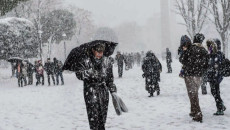
The World Meteorological Organization has warned that severe cold and snow storms may occur in the winter of 2024-2025. This was explained by the fact that La Niña replaced the El Nino climate phenomenon, which served to make the summer months the hottest in the history of observations.



-
According to the World Meteorological Organization, temperatures in Africa are rising faster than the global average, despite much lower greenhouse gas emissions than other continents. Currently, African countries are losing an average of 2-5% of their GDP due to heat waves, heavy rains, floods, cyclones and prolonged droughts.
-
July was the warmest on record, according to a report released Monday by the US National Oceanic and Atmospheric Administration (NOAA). Also, global temperatures have been at record levels for the 14th month in a row.
-
Kyrgyz Prime Minister Aqilbek Japarov announced that the El Nino climate phenomenon in the Pacific Ocean will become a problem for the economy of Central Asian countries. Japarov emphasized that water resources and green energy should be the main link of cooperation between Central Asian countries.
-
The average daily temperature of the oceans has risen to a record high. The increase in temperature, which was previously observed in 20 years, was recorded in 2023 itself. The work of sea water is the reason for the change of the underwater ecosystem, the emergence of strong tropical storms.



-
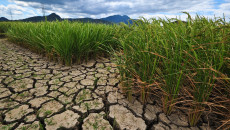
According to the calculations of the European Commission, one third of the population of the EU countries faces the problem of water shortage. In the future, the issue could lead to increased competition for water resources and conflicts within and between states over transboundary water resources, according to a classified document obtained by Politico.
-
February 2024 was the warmest February in the history of meteorological observations all over the world. The average temperature for the month was 13.54 degrees Celsius, 0.81 degrees above the 1991-2020 average and 0.12 degrees above the previous record high of February 2016.


- 01
- 02