

Kazakhstan wants to abandon 70% of coal-fired thermal power plants and boilers
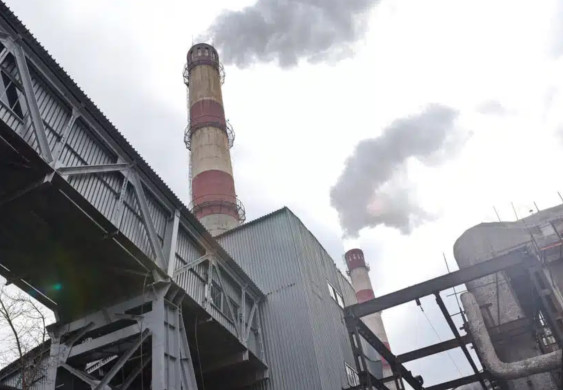
Kazakhstan has decided to phase out coal-fired power plants, which provide nearly 70 percent of the country's electricity. This is part of efforts to reduce greenhouse gas emissions, and a memorandum was signed between ADB and the Ministry of Energy of Kazakhstan at SOP-29 in Baku. As part of this initiative, it is planned to decommission some coal-fired thermal power plants ahead of schedule.
The Asian Development Bank (ADB) and the Ministry of Energy of Kazakhstan have signed a memorandum of understanding to help the republic reduce greenhouse gas emissions, ADB reports.
According to the document signed as part of SOP-29 of the UN Climate Change Conference held in Baku, cooperation will focus on decommissioning coal-fired thermal power plants or switching them to renewable sources or other low-carbon energy technologies.
Initially, feasibility studies will be carried out in order to determine which of the coal-fired thermal power plants and boilers are most suitable for premature decommissioning.
“While staying below 1.5 degrees Celsius (explained below) means transitioning from fossil fuels to clean energy as quickly as possible, the ADB program aims to do this in a way that is tailored to each country's energy and socio-economic development needs. As the climate bank of the Asia-Pacific region, we are committed to helping Kazakhstan to decarbonize its economy in a fair and inclusive manner, and to show how to accelerate the transition to clean energy in Central Asia," said Yevgeny Zhukov, ADB's director for Central and Western Asia.
Under the Paris Agreement, countries agreed to significantly reduce global greenhouse gas emissions and continue efforts to limit the long-term increase in average global surface temperature to below 2 C above pre-industrial levels (1850-1900).
According to the UN, the average temperature increased by more than 1.5°C above pre-industrial levels for the first time in 2015-2016, which was caused by both man-made climate change and a strong El Nino natural phenomenon (changes in surface water temperatures in the equatorial Pacific Ocean). . In late 2023 and early 2024, monthly mean global temperature anomalies exceeded 1.5 C. The first 12-month period in which the average temperature exceeded 1.5 C occurred between February 2023 and January 2024.
The ADB will finance not only coal-fired power plant projects, but also nuclear power plants, with a focus on supporting renewable energy sources and gas generation as a transition.
With 25 billion tons of coal reserves, Kazakhstan ranks eighth in the world. About 70 percent of all electricity in the republic is produced by burning cheap coal. At the same time, the energy sector, including heat and electricity production, accounts for more than 80 percent of all greenhouse gas emissions in Kazakhstan.
As part of its long-term strategy, Kazakhstan plans to achieve carbon neutrality by 2060. It is expected to achieve this by increasing the share of renewable energy sources by 50% - at the end of 2024, this figure was 6%.
Related to the topic
-
In Bashkortostan, after Fail Alsinov was imprisoned for 4 years on charges of extremism, thousands of local residents protested. Clashes broke out between the police and citizens, tear gas and stun grenades were used against the population. In one of his speeches in the Bashkir language, Fail called the Central Asians "black people" and demanded that they go to their own country.
-
Nodirjon Turgunov, who worked as the consul general in Jeddah, was appointed as the extraordinary and autonomous ambassador of Uzbekistan to Saudi Arabia.